Written by Beata Grobenski and Hannah Biddell on 1 October 2026.
This post is a contribution to the third Qualia Research Institute psychophysics retreat, which took place from May to June 2026 in Tepoztlán, Mexico.
Table of contents
Our relationship to gravity is not unlike the relationship of fish to water: We live our entire life in it, are shaped by it, yet hardly notice its ever present influence on the nature of our existence.
Brennan Spiegel, Gravity and the Gut: A Hypothesis of Irritable Bowel Syndrome (2022)
Only philosophers embark on this perilous expedition to the outermost reaches of language and existence. Some of them fall off, but others cling on desperately and yell at the people nestling deep in the snug softness, stuffing themselves with delicious food and drink. ‘Ladies and Gentlemen,’ they yell, ‘we are floating in space!’ But none of the people down there care.
Jostein Gaarder, Sophie’s World (1991)
Abstract
In this proof-of-concept study, we pilot-tested the Gravitational Phenomenology Scale (GPS), a self-report instrument designed to capture phenomenological changes that may specifically relate to the disruption of the brain’s internal model of gravity – its “1-g” strong prior (Jörges & López-Moliner 2017) and super-prior (Nezami & Ferrè, 2026), including sensations of altered weight, body-schema, proprioception, self-location, spatiotemporal-orientation experiences, and energy-like somatic experiences (ELSEs; Cooper et al. 2021). Spiritual and contemplative practices, such as deep meditation states or psychedelics are known to disrupt previously held beliefs (Carhart-Harris & Friston, 2019). Here, we explore whether these practices might disrupt aspects of our usual model of gravity, and if such disruption might explain a specific class of phenomena associated with altered states of consciousness, including ELSEs, out-of-body experiences (OBEs), or altered self-location, including subsequent recalibration and annealing of the internal gravity model.
Introduction: Consciousness and Graviception
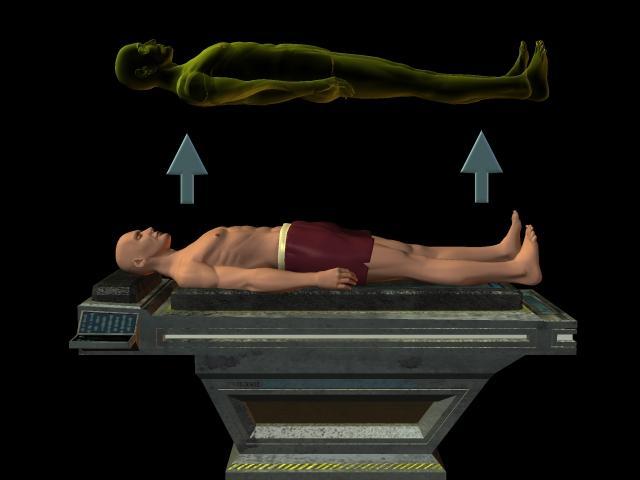
An illustration of an out-of-body experience. (Image source: Wikipedia)
A brief background: what does it mean that gravity is a “strong prior”, and why does it matter for consciousness research, and specifically altered states of consciousness? In predictive processing, perception is inference that minimizes prediction error: generative models make predictions based on prior beliefs, and deviations from expected inputs trigger model updates in accordance with the relative reliability (precision) of sensory data vs. beliefs. That means that if a prior belief is strong (precise) enough, it can overrule actual sensory evidence, and that conflicting data is treated as noise. Gravity is a natural candidate for a strong prior - a highly precise, deeply ingrained, and rigidly held belief (Jörges & López-Moliner, 2017). The statistic it encodes, a constant 9.81 m/s², has not varied across the history of terrestrial life, and it is incredibly precise.
Gravity is detected by multiple sensory organs: visual, vestibular (otolith organs and semicircular canals), proprioception (receptors in muscles and tendons) and other sensory sources (e.g., for somatic cues from kidneys and the intestines), which under normal conditions are subsequently integrated into final percept of the gravity vector (Jörges & López-Moliner, 2017). Under abnormal conditions, these sensory sources may be impacted. As consciousness researchers, we are interested in such “abnormal” conditions, and particularly the conditions where the structure and “temperature” of experience allows for different properties, including altered graviception, to emerge.
The rationale for testing GPS at a residential meditation retreat arose out of Beata’s previous writing on Gravitational Annealing (such as in this 2025 post), which built on QRI’s Neural Annealing framework (Johnson, 2019; Gómez-Emilsson, 2021), and Mike Johnson’s ideas about Vasocomputation, a hypothesis in which vascular smooth-muscle latches physically holds priors (Johnson, 2023). In Neural Annealing, high-energy states raise the system’s effective temperature so that entrenched priors loosen, after which it is afforded the opportunity to settle into a lower-energy, higher-coherence configuration. Through the lens of Vasocomputation, an annealing episode would involve physical body loosening and recalibration of the vasomuscular-tensile patterns, which subsequently inform our cognitive models. In Johnson’s opinion, enlightenment may be more muscular than it is neural.
If gravity is one of the most entrenched priors a nervous system holds, it is a very interesting candidate for what high-energy annealing loosens. In a Gravitational Annealing framework, following annealing, the internal model of gravity, as represented in somatic and physiological signatures, would become more aligned to Earth’s gravity. Andrés Gómez-Emilsson of the QRI pointed out that the overall fidelity of the model itself might also be affected. Because the otoliths register the sum of gravity and linear acceleration, the nervous system has to decompose a single combined signal into two components: how much is the constant pull of the Earth, and how much is my own motion? A high-fidelity model would perform this decomposition well, as it would blend the components appropriately while retaining the capacity to separate them, under acceleration as well as at rest.
Interestingly, one week after the retreat ended Frontiers in Psychology published a paper titled “Space Oddity: microgravity as a neurocognitive catalyst for transformative consciousness experiences,” (Nezami & Ferrè, 2026) proposing that gravity functions as a foundational, high-precision 1G super-prior whose disruption cascades through the brain’s predictive hierarchy. With astonishingly synchronous timing these authors had independently reached a parallel conclusion; albeit theirs through the lens of space medicine (exogenous changes to graviception, occurring where the physical field is removed), while ours (tracked in blog posts from 2024 and 2025) through the lens of psychedelics and contemplative practice (endogenous changes in graviception, where the gravitational model is altered from within).
Aligning with Nezami and Ferrè’s (2026) reference to gravity a super-prior, the aim of this proof of concept was to explore whether deconstruction of gravitational beliefs (via intensive meditation) may trigger a cascade of other graviception-related physiological and perceptual events. However, where Nezami and Ferrè (2026) suggest a unidirectional arrow where a microgravity environment perturbs the reliability of the 1-g super-prior, and a cascade of prediction errors that cause the brain to recalibrate sensory models, we suggest the arrow may be bidirectional. That is, perturbing the reliability of 1-g super-prior through consciousness-altering practices might induce effects akin to those experienced in microgravity, such as altering one’s experience of weight.1
Under active inference frameworks, the brain doesn’t only predict what the environment (including the body) is doing, but also issues predictions as commands that the body then carries out. Through this framework, consciousness-altering practices have previously been theorised to disturb the prior landscape (e.g., Carhart-Harris & Friston, 2019; Laukkonen & Slagter, 2021). This may mean that meditation may be a means of inducing not a mere hallucination of altered gravity, but an experience that may be explained by deconstruction of the gravitational super-prior, reflecting itself in the body, and thus inducing adequate mechanotransductive and physiological responses. In other words, instead of simply settling with the proposed fully separate mechanics of “actual” and “simulated” microgravity, we are interested in running empirical studies and finding out how much the mind may convince the body that it is in a microgravitational environment and allow it to simulate an experience as such. The V.1 of GPS aimed to capture experiences related to microgravitational phenomenology, such as those reported in space medicine.
Methods
A 9-day jhāna meditation retreat took place in Tepoztlán, México, organized by the Qualia Research Institute who secured housing and food for all the participants. Participants were recruited by their shared interest in meditation, experience or curiosity about jhānas, and overall range of abilities. In preparation for their participation in the meditation retreat, most participants listened to lectures about jhāna techniques, some of them by Rob Burbea and some of them shared in person by the on-retreat meditation teacher Wystan Bryant-Scott. Focus on sensation on the nose during breath, focus on the entire body, or focus on mettā were all suggested as core practices, and participants were encouraged to try them in the first few days and then double down on one technique, whichever turned out to be most promising.
Participants answered the Gravitational Phenomenology Scale (GPS) in the 24 hours before the retreat started, and again in the 24-48 hours after the retreat ended. In the pre-retreat participants were asked “During the last week in general how much did you notice the following experiences?” In the post-retreat participants were asked “During your most deep meditation (or the deepest you remember) over the last week, how much did you notice the following experiences?” The same twelve items (listed below) were asked at each time point. Items were rated on a 1 (not noticeable at all) to 5 (extremely noticeable) scale. Possible scores on this scale range from 12 to 60, where a score of 12 means someone noticed none of these experiences, and 60 means they noticed all twelve to an extreme degree.
The post-retreat survey also asked participants to indicate which of the GPS items were associated with any specific jhāna, with options for J1 - J8, none, and not sure. “Please indicate which jhāna (if any) are associated with the following experiences for you. Select all that apply”. Finally, the post-retreat survey offered a space for free text responses for any “additional comments”, in case someone wanted to describe their experience.
GPS Items
- I experienced sensations of weightlessness, floating, or felt as if my body had become lighter or a physical weight had been lifted.
- I felt uncertain about my orientation in space, as though the normal sense of up/down, left/right (or other orientation) had become ambiguous or unclear.
- I felt sensations of pressure or expansion in my head, particularly at the crown or behind the eyes.
- I experienced rising or upward-moving sensations of energy along my spine, neck, or into my head, like something flowing or being pulled upward inside my body.
- I felt sensations of my physical body spinning, tilting, or moving through space, even though my body was not moving.
- I felt as though my awareness or point-of-view was moving, floating, or shifting position.
- I saw internal light phenomena associated with pressure sensations in the head or eyes, such as brightness, flashes, glowing, or luminosity.
- I experienced a profound release of postural muscle tension, as though my body no longer needed to resist being pulled down.
- My perception of depth or three-dimensional space felt altered, as though objects, the room, or my body had different proportions than usual.
- Time seemed to pass differently than usual, either speeding up or slowing down.
- I felt gravity pulling unevenly on different parts of my body, such as one limb feeling heavier than another, or a sense of being pulled sideways.
- My body felt unburdened, as though weight or pressure that is normally present had been lifted or released.
Results
The data reported here includes a final sample of 8 participants (after excluding 4 who completed only the pre-retreat survey, and 1 who submitted incomplete responses), aged 23 to 44. Given the sample size, we report here descriptive statistics and trends, rather than significance testing. According to self-reports in the pre-retreat survey, participants’ ranged in prior meditation practice between 20 to 9,000 lifetime hours (median 450), and under a year of practice to more than a decade (median 3–5 years). Reported hours of daily meditation practice during the week prior to the retreat ranged between 0.2 to 3.5 (median 1.1). Asked how reliably they could enter jhāna, half of the participants said “rarely” or “unpredictably” with only one “reliably on demand,”. Two participants reported previously accessing all eight jhānas, while three participants were unsure whether they had previously reached any.
The average pre-retreat score (n=8) was 27.9, while average post-retreat score was 37.6, with a mean change score of +9.8, 95% CI [2.6, 16.4] (out of a possible range of 12 - 60). Despite the small sample, the effect size of the change pre- to post-retreat in the paired samples was substantive, dz = 0.92, 95% CI [0.24, 3.06]. Six of the eight participants’ ratings on the GPS scale increased (see Figure 1), while two participants whose scores decreased were the two with the highest scores at baseline.
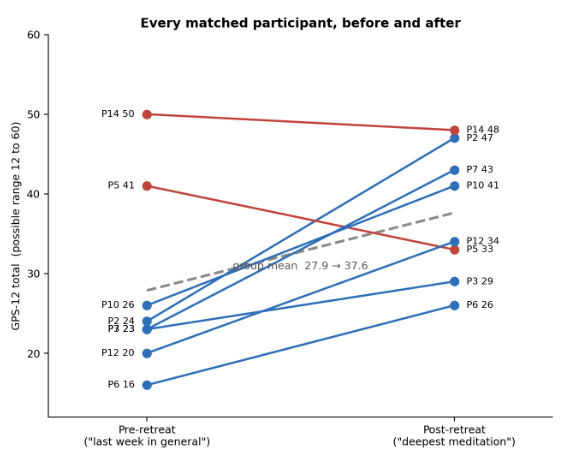
Figure 1. Pre-retreat and post-retreat GPS scores across 8 participants; pre-post increase in blue, pre-post decrease in red, average change in grey.
Item level pre- to post-retreat change scores are shown in Figure 2. Raw counts for each item (instances of participants ratings for each item) at pre- and post-retreat are shown in Figure 3.
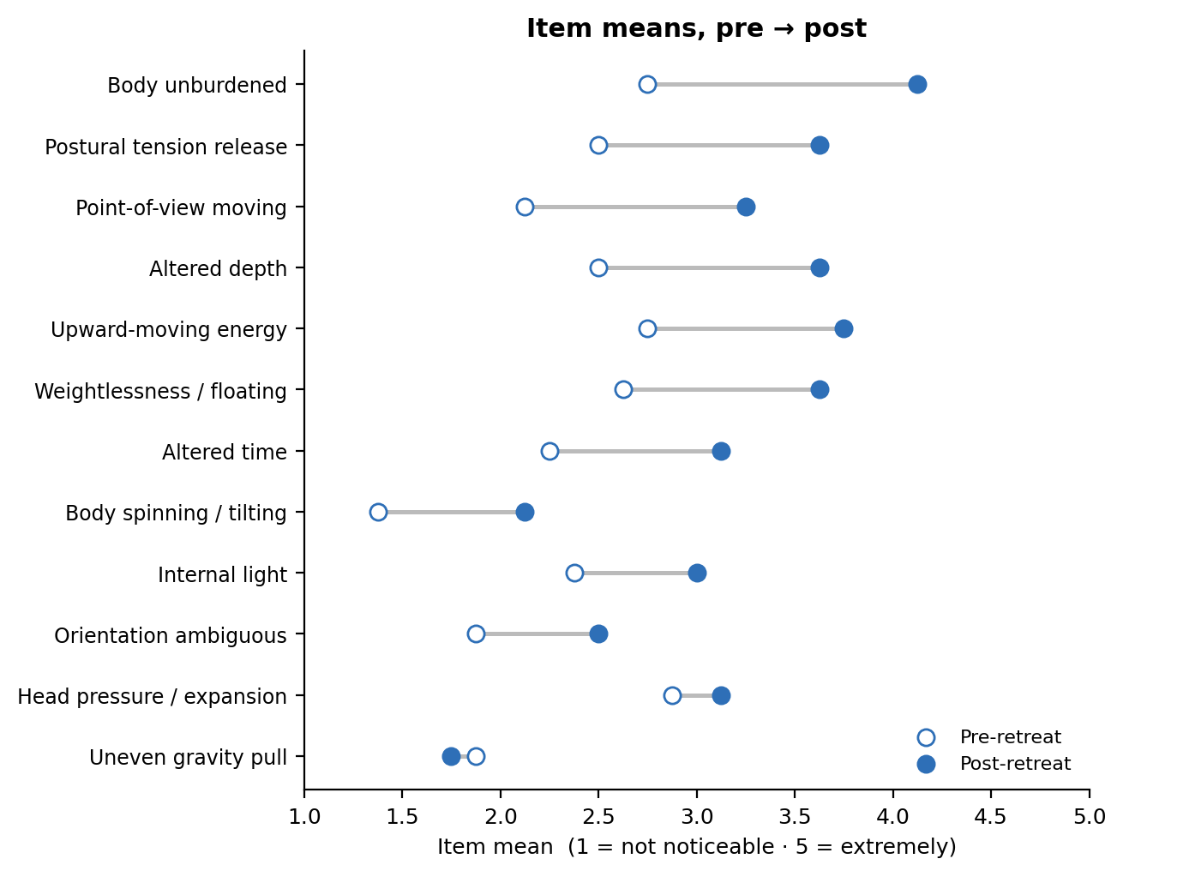
Figure 2. GPS item means pre- and post-retreat.
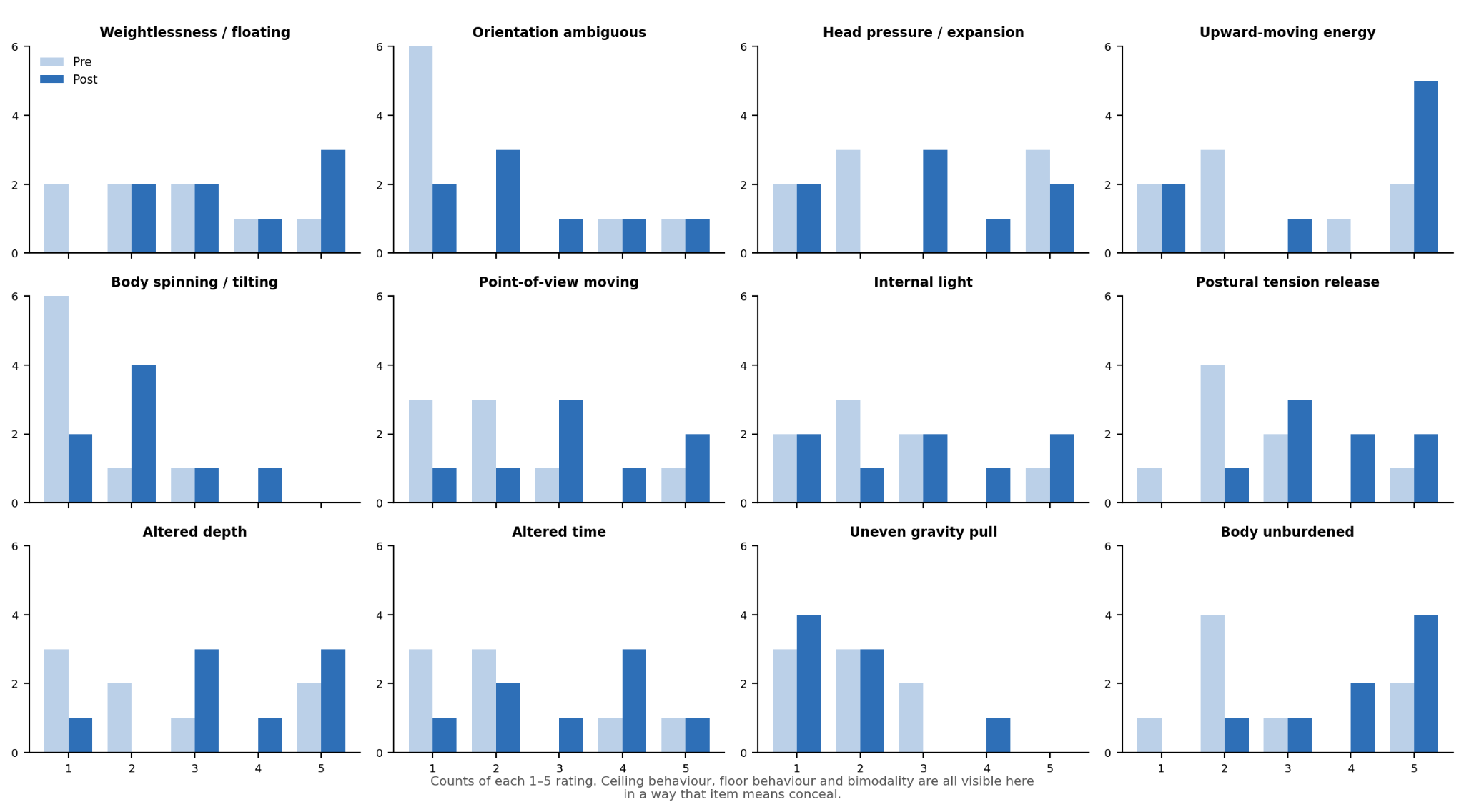
Figure 3. Raw counts for each item’s rating at pre- and post-retreat.
Participants also recorded which jhāna each sensation arose in, a judgement made separately from the intensity ratings and not framed in terms of any expected sequence. Raw counts fall off toward the higher jhānas (see Figure 4), but that may be mostly an artifact of fewer participants experiencing higher jhānas (e.g., fewer reached J5 compared to J2).
Dividing by the number who reached each jhāna removes this artifact (see Figure 5), and the picture changes: the frame-dissolution items, which look sparse in the raw counts, are attributed at their highest rates from J4 onward. Orientation ambiguity runs at 0.14 through the first three jhānas and 0.75 at J4. Note: the single attribution at J8 comes from one participant.
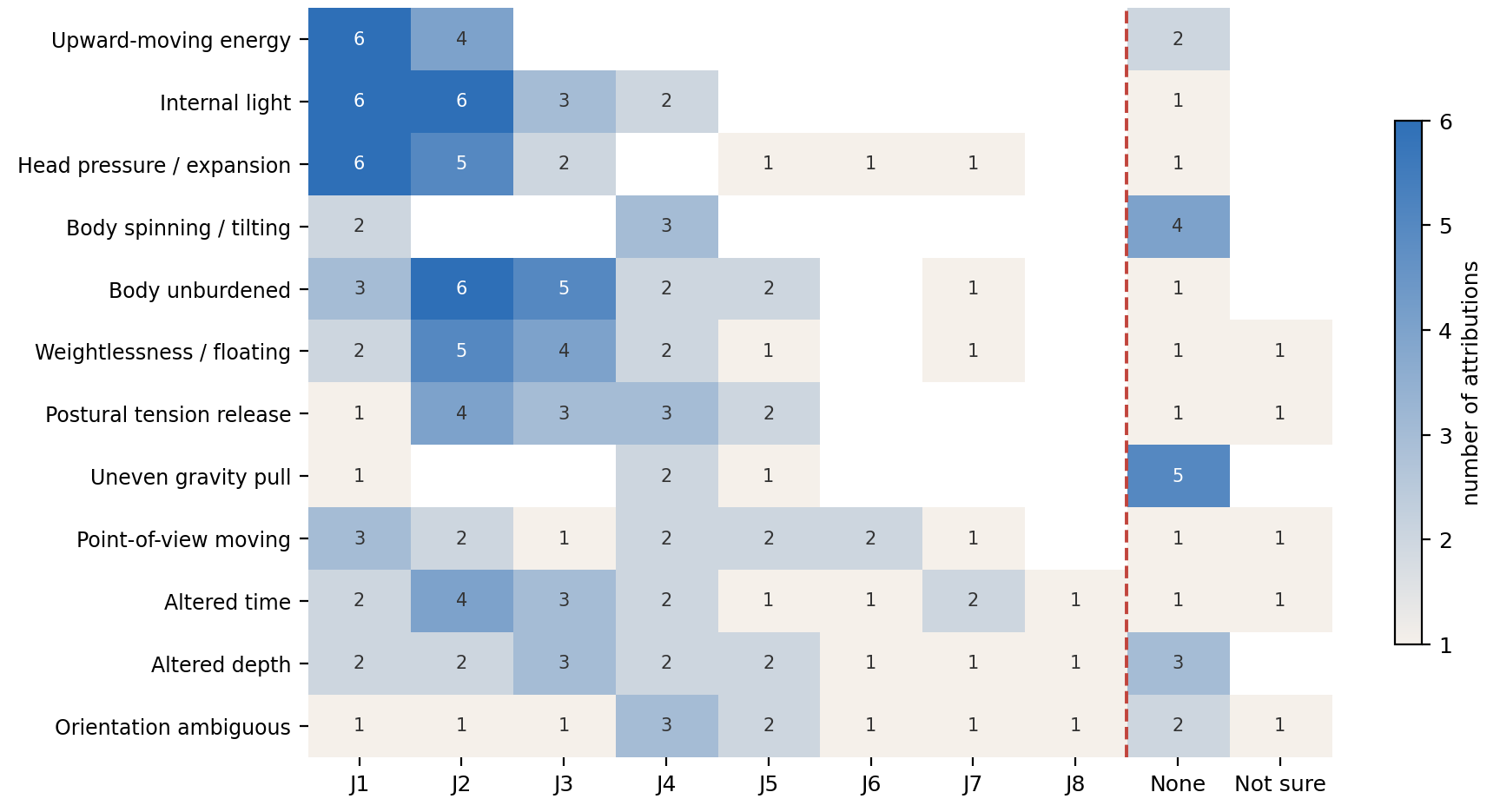
Figure 4. Which jhāna each sensation was attributed to (raw counts).
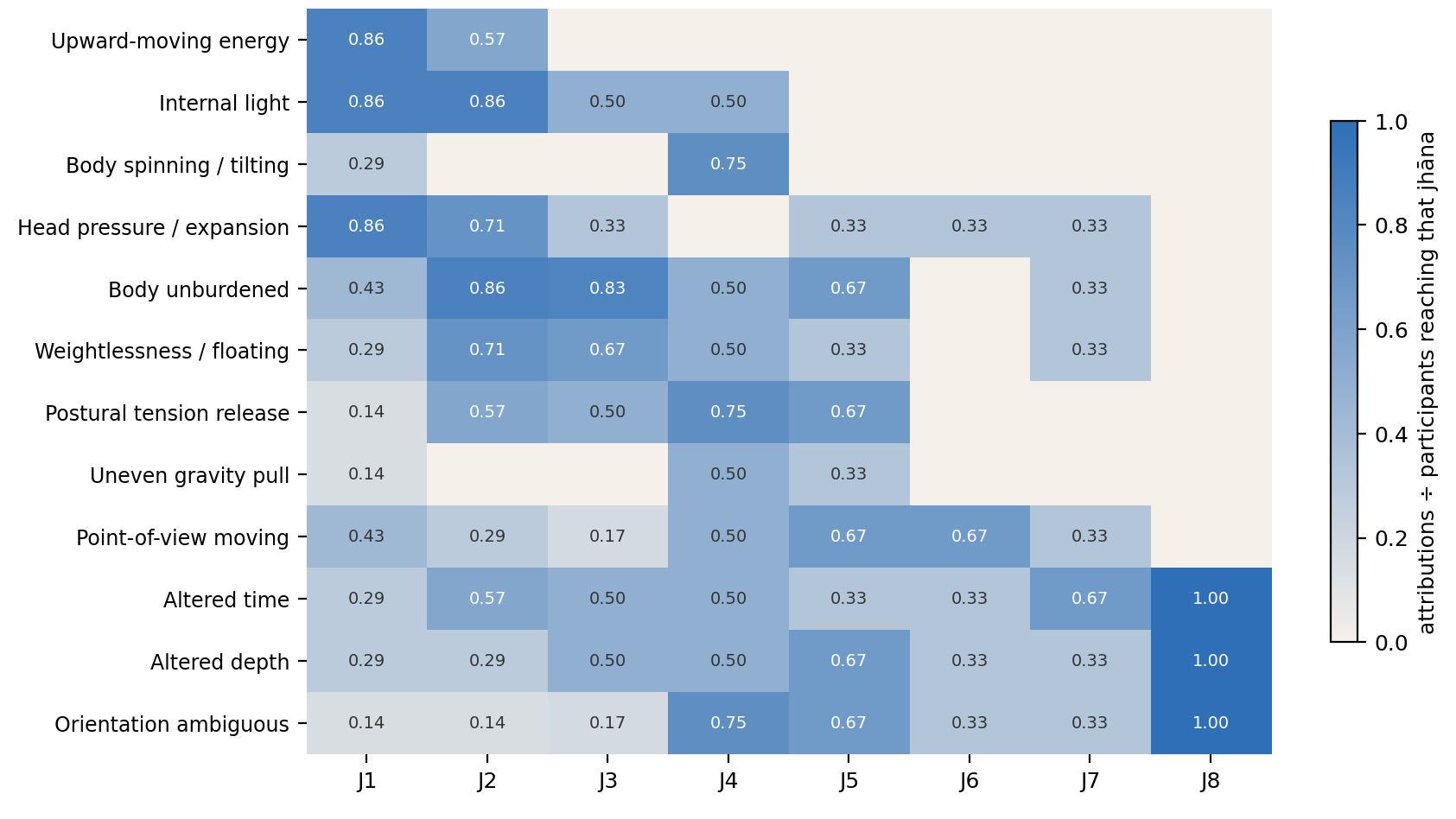
Figure 5. The same attributions as in Figure 4, divided by how many participants reached each jhāna. This removes the artifact in Figure 4, where counts fall off to the right likely because fewer people got there.
The items order themselves: participants rated each item for intensity and then, separately, recorded which jhāna it arose in. Those two judgements were collected independently of each other and neither was framed in terms of an expected sequence. Computing each item’s mean attributed jhāna nevertheless sorts the twelve along a single gradient: pressure and energy early, lightness and release in the middle, spatiotemporal frame dissolution late (Figure 6). The arc matches how one participant described the same territory in free text, calling the first jhāna “turbulence and quick efficient reconfiguring of pressure fields,” the second “the process of becoming lighter,” the third “very light.”
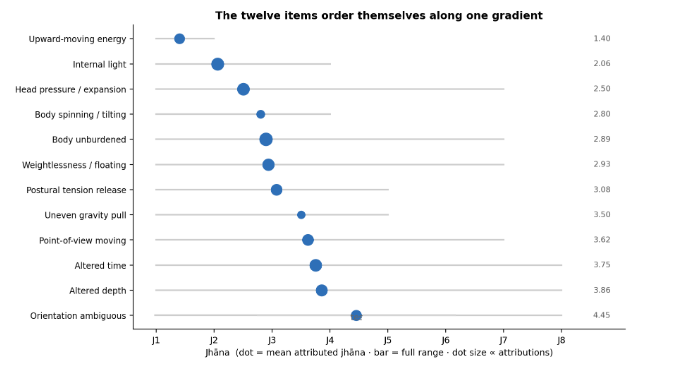
Figure 6. The twelve items order themselves along one gradient: pressure and energy early, lightness and release in the middle, spatiotemporal frame dissolution late.
Discussion
Our aim here was to begin to assess whether gravitational super-prior might be a mechanistic contributor to the previously mapped somatic phenomenology of altered states. Overall, the pattern of results suggests that intensive jhāna meditation experience is associated with changes in gravitational phenomenology. Some items, particularly those related to the release of bodily tension, weightlessness, and upward flows of energy showed stronger changes from pre- to post-retreat, while others related to uneven gravity pull or head pressure showed overall less change. Uneven gravity pull had been added at a participant’s suggestion (during survey development) rather than derived from our literature review, and showed the least change. However, while changes in feelings of pressure in the head also showed minimal mean change, it was notably one of the items most frequently associated with J1 and J2. This suggests that mean change scores are insufficient for assessing altered gravitational phenomenology around jhāna meditation particularly, since each jhāna may have vastly different phenomenology. Lastly, gravitational phenomenology may become less relevant when moving toward formless jhānas (J4-J8), because, as Leigh Brasington noted in an interview before the retreat, in the deeper jhānas there is no experience of it all. Also, graviception changes associated with each jhāna may not be associated with overall graviception changes pre- to post-retreat.
Limitations
The most notable limitation for the proof of concept here was our small sample, including only 8 participants. Because of this, our findings here can only hint at the direction of effects, and cannot assess their significance. The sample is also too small for factor analysis, so the subscale structure of the scale remains to be seen. We also note an asymmetry in the phrasing of the survey instrument (pre-retreat participants were asked about “the last week in general” while post-retreat participants were asked about their “most deep meditation over the last week”) may have introduced some unintended bias in responses. Additionally, we did not ask about participants’ consciousness-altering activities in the week(s) prior to the retreat. Two participants showed very high baseline GPS scores (the same two participants showed overall decreases from pre- to post-retreat), and unknown activities in the week(s) prior to the retreat may explain these higher baselines and thus overall decreases in GPS.
Given the constraints of the proof-of-concept study, what the results of this pilot can support is narrow but they offer a strong signal to explore the framework deeper.
Future directions
Beyond rigorous scale development across meditation and psychedelic research contexts, the next step would be testing the somatics: can consciousness-altering technologies like meditation or psychedelics perturb one’s experience of 1g, and if so what impact would that have on the mind, brain and body? Would those effects simulate those experienced in microgravity?
GPS as a self-report instrument can establish that people report gravity-relevant experiences but it cannot establish that anything actually changes in the body. Future studies assessing the inter-relationships between consciousness-altering practices, graviception, and physiology (particularly blood distribution, baroreceptor signalling, CSF, cephalad fluid shifts, and mechanotransduction) are being planned.
The problem of consciousness and graviception is heavily interdisciplinary, spanning predictive processing, vestibular physiology, cardiovascular mechanics, emergent phenomenology, psychometrics, and nonlinear dynamics. We are presenting an open question and a gap in understanding, and we welcome collaborative efforts to crack the puzzle.
Note: since this writeup is intended as a proof of concept research report, a theoretical piece is intended to be released separately in the coming months. However, you can see in the table below differences and overlaps in three current frameworks working on consciousness and graviception.
| Nezami & Ferrè (2026) | Kent (2024) | Grobenski & Biddell (2026)2 | |
|---|---|---|---|
| Field | Vestibular cognitive neuroscience, space psychology | Grounded cognition, mental health promotion | Consciousness research, spiritual and contemplative practice, psi |
| Purpose | Explain transformative experience in spaceflight | Translate graviception into public-health intervention | Explain the somatics of altered states |
| Output type | Perspective, literature synthesis | Opinion, theoretical framework | Empirical pilot with instrument |
| Perturbation | Exogenous, degraded otolith signal | Both: affect → simulation, and physical practice → affect | Endogenous, practice- or belief-altered model |
| Gravitational input | Diminished or absent | Present and normal | Present and normal |
| Named mechanism | GABAergic inhibition, thalamo-cortical gating, vestibular-autonomic coupling | Anterior insula simulating orientation without sensory feedback; salience network; gut-brain axis, gut-derived serotonin | Blood distribution, baroreceptor signalling; CSF; cephalad fluid shift; mechanotransduction |
| Framework | Bayesian predictive processing | Grounded cognition | Active interoceptive inference |
| What changes in the body | Real change, environmentally caused | Real change, but caused by physical practice (posture, gait, floatation, diet) | Real change caused by an internally altered model and attention, with no external manipulation |
| Target phenomenology | Overview Effect, depersonalisation, altered self-location | Everyday affect — depression as “fallen,” anxiety as “falling” | ELSEs, weight release, kundalini-type reports, altered self-location |
| Altered states | Psychedelics, at computational level only; meditation absent | Psychedelics in passing, via a VR analogy; meditation present as one intervention among several | Central: jhāna meditation, 5-MeO-DMT |
| Instrument | None | None | GPS (12 items) |
| Data | None | None | Pilot, n = 8 matched pairs |
| Falsification criterion | None stated | None stated | Free-response test; physiological co-measurement |
On a more philosophical and speculative account, as well as due to our interest in panpsychist and dual-aspect monist ontologies, this exploration could go in the following other directions: (1) what “surrendering” and “fully letting go” as a common instruction for deep psychedelic journeys means somatically, (2) as a contribution to psi research, exploring what is it about awareness that seems to be able to expand beyond anatomical body in space in time (e.g., in mediumship or remote viewing), and (3) whether the experience of death (e.g., NDEs) might be understood as a “muscular surrender to gravity” or a complete loss of resistance to this constant pull.
To end where we started, if Spiegel is right that we are in gravity as fish (and mammals!) are in the ocean, then both astronauts, psychonauts and spiritual seekers may have something in common with…

(Image source: iStock)
References
- Carhart-Harris, R. L., & Friston, K. J. (2019). REBUS and the anarchic brain: toward a unified model of the brain action of psychedelics. Pharmacological reviews, 71(3), 316-344.
- Cooper, D. J., Lindahl, J. R., Palitsky, R., & Britton, W. B. (2021). “Like a Vibration Cascading through the Body”: Energy-Like Somatic Experiences Reported by Western Buddhist Meditators. Religions, 12(12), 1042. https://doi.org/10.3390/rel12121042
- Gómez-Emilsson, A. (2021). Healing Trauma with Neural Annealing. https://www.qri.org/blog/Neural-Annealing/
- Grobenski, B. (2025). Introduction to Gravitational Annealing. https://thingsiwasntsupposedtotalkabout.wordpress.com/2025/05/21/introduction-to-gravitational-annealing/
- Johnson, M. E. (2019). Neural Annealing: Toward a Neural Theory of Everything. Opentheory. https://opentheory.net/2019/11/neural-annealing-toward-a-neural-theory-of-everything/
- Johnson, M. E. (2023). Principles of Vasocomputation: A Unification of Buddhist Phenomenology, Active Inference, and Physical Reflex (Part I). Opentheory.net. https://opentheory.net/2023/07/principles-of-vasocomputation-a-unification-of-buddhist-phenomenology-active-inference-and-physical-reflex-part-i/
- Jörges B., López-Moliner J. (2017). Gravity as a strong prior: implications for perception and action. Front. Hum. Neurosci. 11:203. doi: 10.3389/fnhum.2017.00203
- Kent, L. (2024). Mental gravity: Modelling the embodied self on the physical environment. Journal of Environmental Psychology, 94, 102245.
- Laukkonen, R. E., & Slagter, H. A. (2021). From many to (n) one: Meditation and the plasticity of the predictive mind. Neuroscience & Biobehavioral Reviews, 128, 199-217.
- Nezami A., Ferrè, E.R. (2026). Space Oddity: microgravity as a neurocognitive catalyst for transformative consciousness experiences. Front. Psychol. 17:1769177. doi: 10.3389/fpsyg.2026.1769177
At ASSC conference that took place in Heraklion, Crete last summer (2025), Olivia Gosseries presented work on trance states induced in a lab, including a participant who could lift a heavy drum in trance but not outside it, and dynamometry showing higher maximal grip force in the trance state. Linking this finding into our hypothesis and differentiating a recalibrated internal gravitational model from general arousal: if astronauts misjudge object weight after landing, the question is whether psychonauts and certain contemplative and spiritual practitioners would too, in particular during or right after deeper, trance-like states of consciousness.↩︎
After this report has been written, we found that somatic graviception had previously been explored at the German IGPP (Institute for Frontier Areas in Psychology and Mental Health) in 1997 and 2002 and are aiming to analyze how it can inform our approach. See: 10.1016/S0167-8760(97)00053-6; 10.1016/S0167-8760(01)00184-2↩︎
Citation
For attribution, please cite this work as:
APA
Grobenski and Biddell (2026, October 1). Ladies and Gentlemen We Are Floating in Space: Gravitational Phenomenology Scale (GPS) – A Proof of Concept Report. https://heart.qri.org/retreats/2026-tepoz/beata-grobenski/gravitational-phenomenology-scale.html
BibTeX
@misc{grobenskibiddell2026gps,
  author = {Grobenski, Beata and Biddell, Hannah},
  title = {Ladies and Gentlemen We Are Floating in Space: Gravitational Phenomenology Scale (GPS) – A Proof of Concept Report},
  url = {https://heart.qri.org/retreats/2026-tepoz/beata-grobenski/gravitational-phenomenology-scale.html},
  year = {2026}
}