Written by Roger Thisdell on 11 September 2026.
This post is a contribution to the third Qualia Research Institute psychophysics retreat, which took place from May to June 2026 in Tepoztlán, Mexico.
All beings that see can feel, but not all beings that feel can see.

Have you ever noticed, that, with a high degree of accuracy, you know what it would feel like to lick any surface you look at? And I mean just by looking, not actually touching. No? Well, give it a try, now.
This exercise is an easy way to start making the connection that everything you look at (at least can) corresponds with somatic sensations (a.k.a. bodily sensations). And it’s not just with your tongue that you can start becoming more aware of this connection between the visual and somatic. Try imagining feeling (again, without actually touching) any object you look at with your index finger.
Now, elbow.
Now, forehead.
Notice how with this exercise you can start to lightly feel those objects when looking at them. Even if you think they are just ‘phantom sensations’, there is still, nonetheless, an experience of feeling. And though they may just be very faint feelings, they are impressing your experience and so are real feelings.
Once we’ve begun to make this connection, we actually open a door to an extremely crucial insight into the nature of the construction of our consciousness; because what if I told you that regardless of whether you are doing this exercise or specifically aware of it or not, somat-visual coupling is always occurring so long as you are seeing? And in fact, somatic feeling may actually be an essential component of conscious seeing - if not all of (human) consciousness itself.1
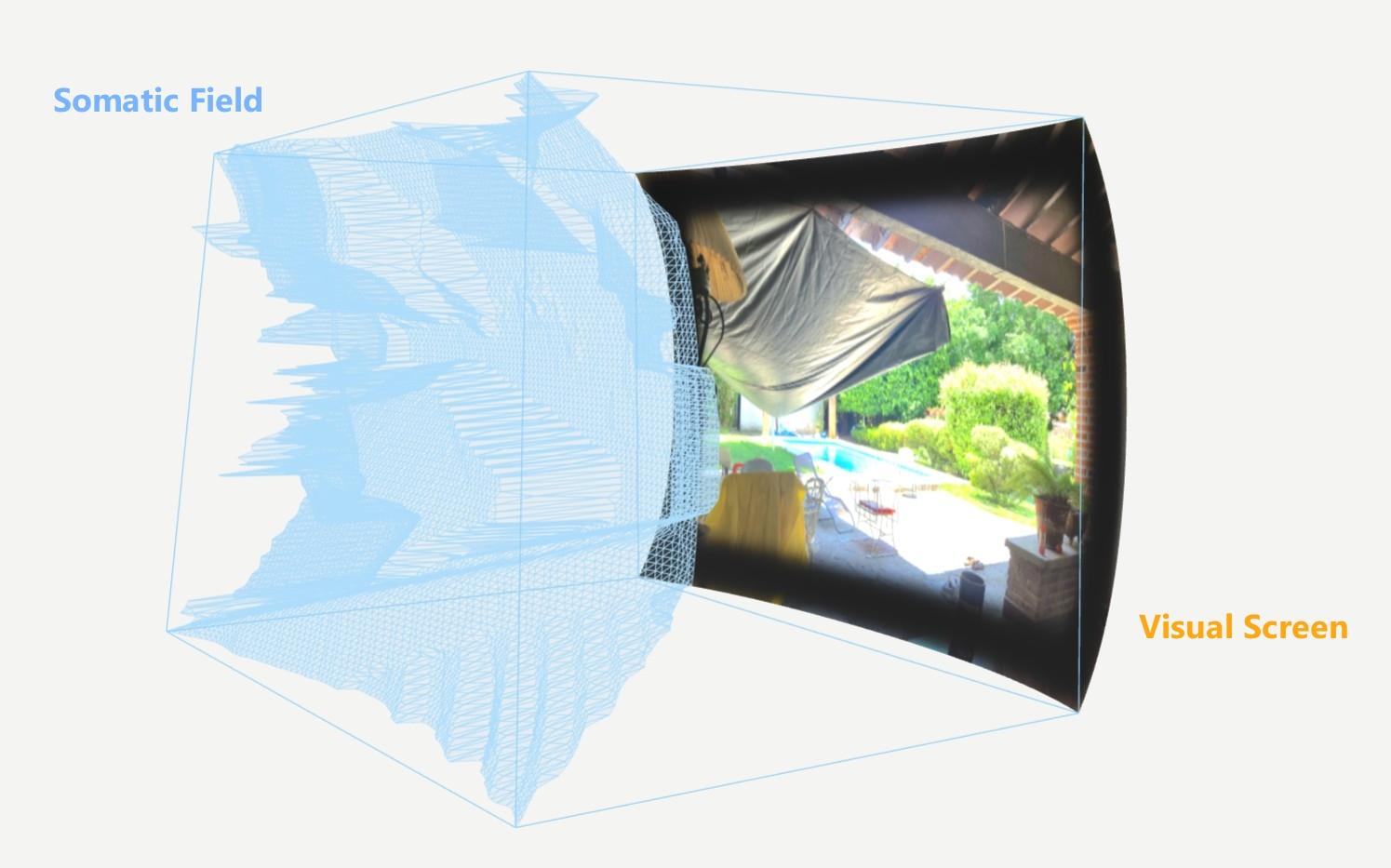
Open the simulation on its own. Drag to rotate, scroll to zoom.
Basically, consciousness relies on sense modalities and more specifically seeing seems to rely on somatic feeling, but somatic feeling doesn’t rely on seeing in the same way. Although, often, when one goes to feel a particular part of the body a faint mental image of that body part may coalesce with that sensation, this definitely doesn’t always happen. As I’ll explain, there is an asymmetric relation between the senses, in that somatic feeling can nowhere near as easily be removed from seeing itself; unlike with removing any visual binding from somatic feeling itself. This means somatic feeling is in some way a more fundamental aspect of (human) consciousness.
Consider: there are humans who cannot see and humans who cannot hear, smell or taste, but there are no (conscious) humans who cannot somatically feel, at all.
Let’s explore this further.
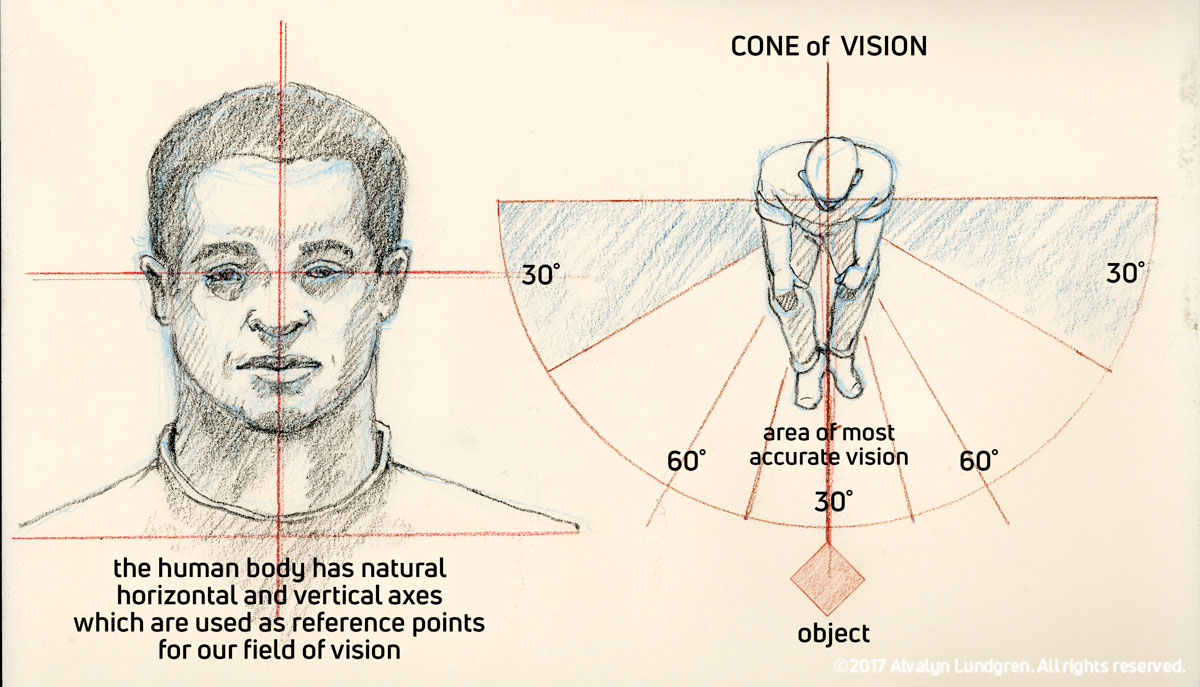
Source: https://alvalyn.com/drawing-basics-visual-approach-linear-perspective/
You see (pun intended), we don’t just see the world ‘out there’, removed from it, as an independent body with a single perspective point; we are fully immersed in a synesthetic sensorium. Our senses coalesce in a way that the felt bodymind is the environment - not apart from the environment, not in the environment, not before, next to, etc, etc… but [is] the environment.
While, the sense of the body-schema (that sense of the outline and size of your body and what we attribute to sensing with proprioception) is only part of your full conscious experience; the somatic sensing aspects of experience are not contained only within the body-schema. There is somatic feeling throughout the 3D experience space, not just within the outlined sense of the body. This becomes clear in the more defabricated, formless jhana states (e.g. “the realm of boundless space” and “the realm of boundless consciousness”), where the sense of the body-schema disappears and yet there is still a vast space of somatic sensations.
The fourth to the fifth jhana, from The 8 Jhanas.
As the beginning exercise reveals, objects in the visual field correlate with sensations in the somatic field. However, even once this connection is recognised, initially it may still seem like sights happen “over there” (out in the environment), and sensations happen “over here” (within the body-schema); that although they are causally connected, they are still separated in experience space. But upon more examination, it becomes clearer that the apparent separation of the sense modalities is constructed slightly later in time.
If we can consciously perceive faster (by increasing our noticings per second and sensory clarity) and/or not have such a reified body-schema, then the seeming spatial separation of a visual phenomenon from a somatic phenomenon is much less obvious. In fact, they seem to almost immediately co-arises together (in the same experiential location). While the body-schema is a much more complex construction of consciousness, binding multiple inputs, over a period of time and designating them structured locations, which, when reified, leads to the sense of the separation of the two sense modalities. This obfuscates the initial somatic-visual coupling. But before any sense of a body-schema is formed, the sense of distance and separation between “sights over there” and “sensations over here” is not apparent.
The formless jhanas (states without a body-schema) can lend insight into this, but tend not to be very visual experiences. However, intense psychedelic experiences and those found during deep fire kasina practice can shoot someone into very “unbodied states” but still with strong visual components.
From our analysis of basic visual phenomena, as composed of waves, sometimes interfering with one another to create boundaries - which might be the basic building blocks of phenomenally constructing objects of perception - these visual formations of edges seem to require subtle binding with the somatic field. That is, the impression of an edge of some kind in the visual screen might actually rely on a slight somatic tension occurring.
Emil Hall’s replication of 5-MeO-DMT wavefronts, from Wavefronts focused into knots.
What’s being suggested here is that even that typical and simple crest formation of psychedelic waves, is somatically felt as a slightly denser or more contracted part of the whole consciousness field - it may be very, very slight, but it’s there. So, if these basic visual formations are revealing of how vision as a whole constructs itself, and this also applies to our more sober, mundane views of perceiving the world around us. It follows then that basically any line, edge, or shape we visually detect is also (necessarily) somatically felt. However, normally these sensations are too subtle for most to notice and report on.
One clear example for me of somatic-visual coupling was during the use of 5-MeO-DMT. Not long after inhalation, I could visually perceive a bunch of white diamonds. Why diamonds though? Well, it became clear that the origin of the diamond came from the sense of feeling the angle of my right cheek, which was then being visually represented as a white curve. Now 5-MeO can tend to mirror things in the horizontal and vertical planes (and fractalise). So if you take a curved line and mirror it twice, you get a diamond! A clear example of visual input being made from somatic sensations.
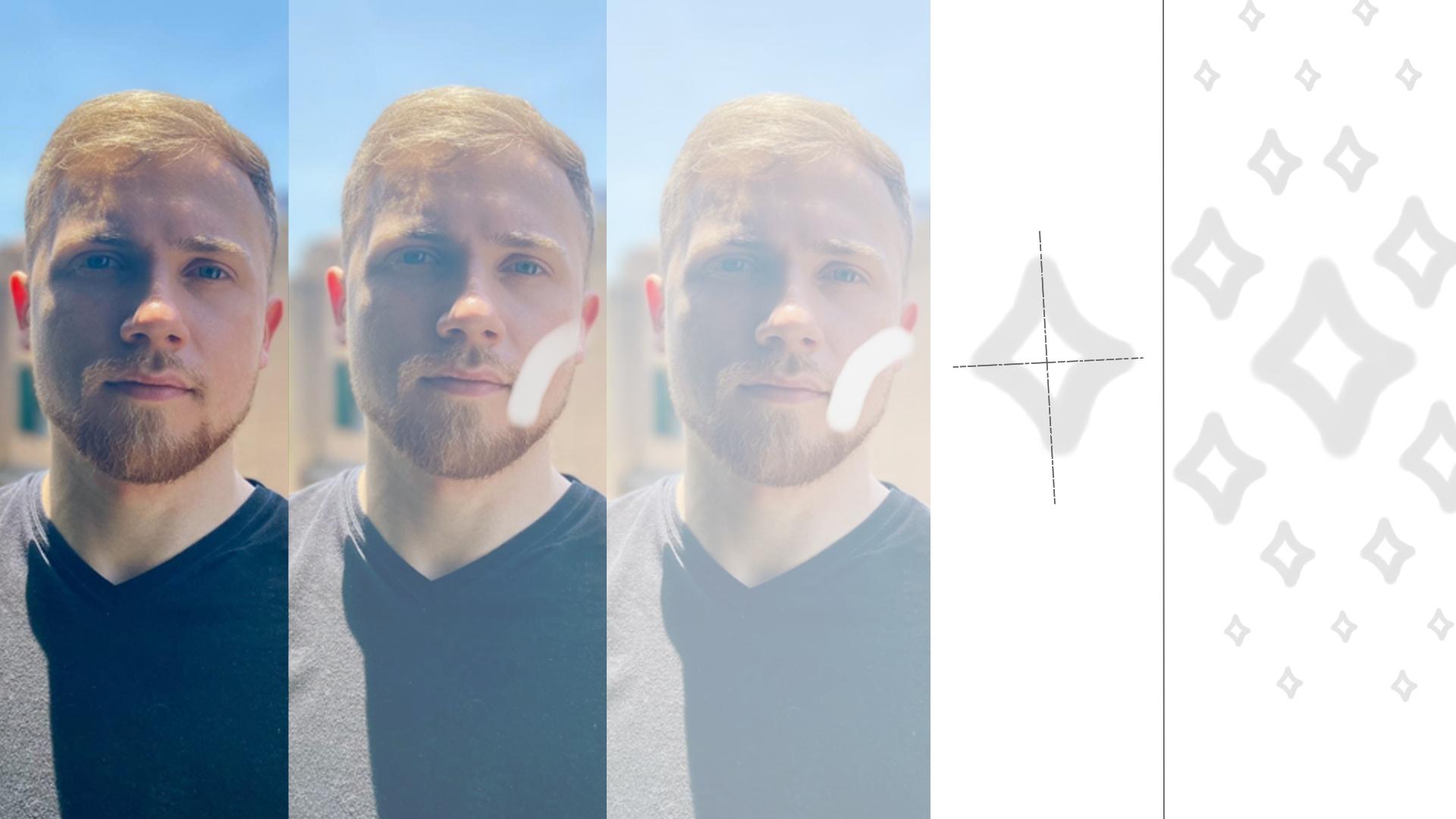
Check out Scry’s psychedelic animations. Notice how you can FEEL the valence of them!
https://x.com/Scrygl
Two of Scry’s 5-MeO-DMT replications, from the Replications gallery.
Another contributing area of experience to this idea is fire kasina practice.
During fire kasina (FK) retreats - which, for most, is a very visually focused meditation practice - practitioners typically go through a series of progressive periods in which they witness the formation of simple to more complex and sophisticated visuals generating in their experience. There is much about doing the practice which can be similar to having a psychedelic experience.
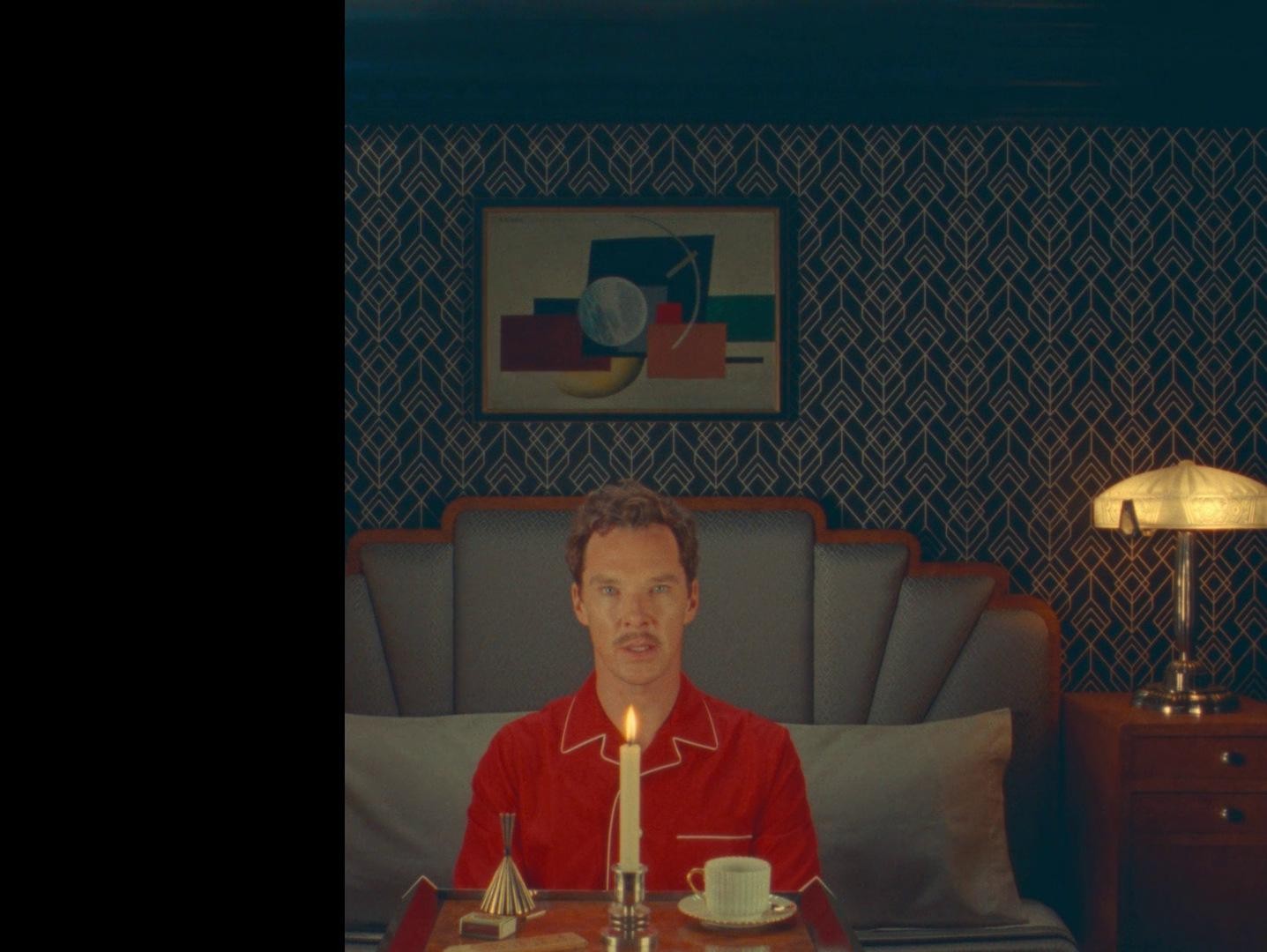
The short story/film ‘The Wonderful Story of Henry Sugar’ by Roald Dahl is literally about Fire Kasina.
Something in particular I noticed while doing FK was how attention wanted to naturally spend time on somatic sensations; despite best efforts to focus on the visual nimitta (the main concentration object of FK). So attention would be strongly pulled off of vision for periods during the classic ‘onboarding’ phase of the retreat (typically the first week or so). This is a process people may call ‘the murk’, because suddenly they find it very hard, to impossible, to perceive anything complex in the visual screen; hence the name, as things seem “murky”.
Without this recognition of where attention has gone (from focus on seeing to feeling), people often report an added frustration and confusion about not being able to clearly perceive anything at all. In my case at least, it was clear that experience needed to go dark and process some things in the body and then reconfigure its relationship with vision, after which I could more effortlessly pay attention to the visual nimitta; and this actually seemed very important for the practice.
I postulate that reconfiguring the relationship of the somatic and visual field is an essential component for the forming of certain visuals in consciousness, and if they are not synchronised in certain ways then it’s exceedingly hard to visually perceive anything (eyes closed). After a FK retreat it became obvious that somatic sensations are what provide the texture mapping and sense of depth to the visual screen.
In fact, it has become clear to me that a sign of the classic ‘break through’, out of the onboarding phase, into the more equanimous periods of FK (which, for me, led to a lot more rainbow-esque luminosity in the visual screen), is marked by my consciousness establishing a broad, equal weighting and assimilation among visual-somatic coupling. Before this period, it’s clear that the visual screen isn’t equally illuminated and clear, but contains dark, clumpy patches, where gross somatic contractions feel glued to it. For example, there may be a tension in the left side of my neck and this is reflected in the visual screen by an associated area which I can’t see into, and distorts any visual phenomena that run into it. But then by going through a process of meditating for 10 plus hours a day, for a week, there is a distinctive phase shift that occurs where the whole visual screen opens up, becomes much easier to perceive and the whole somatic field feels much more symmetrically distributed.
Also the relationship between seeing and feeling was really revealed during FK, as I learnt to form objects on the visual screen. Instead of trying to just force them there through sheer will, it proved to be more effective to trace and feel the lines of the shapes on my body-map somewhere, and they respectively showed up on the visual screen; depending on where that region of the somatic field was coupled to the visual field.
The body is the canvas the world is painted on.
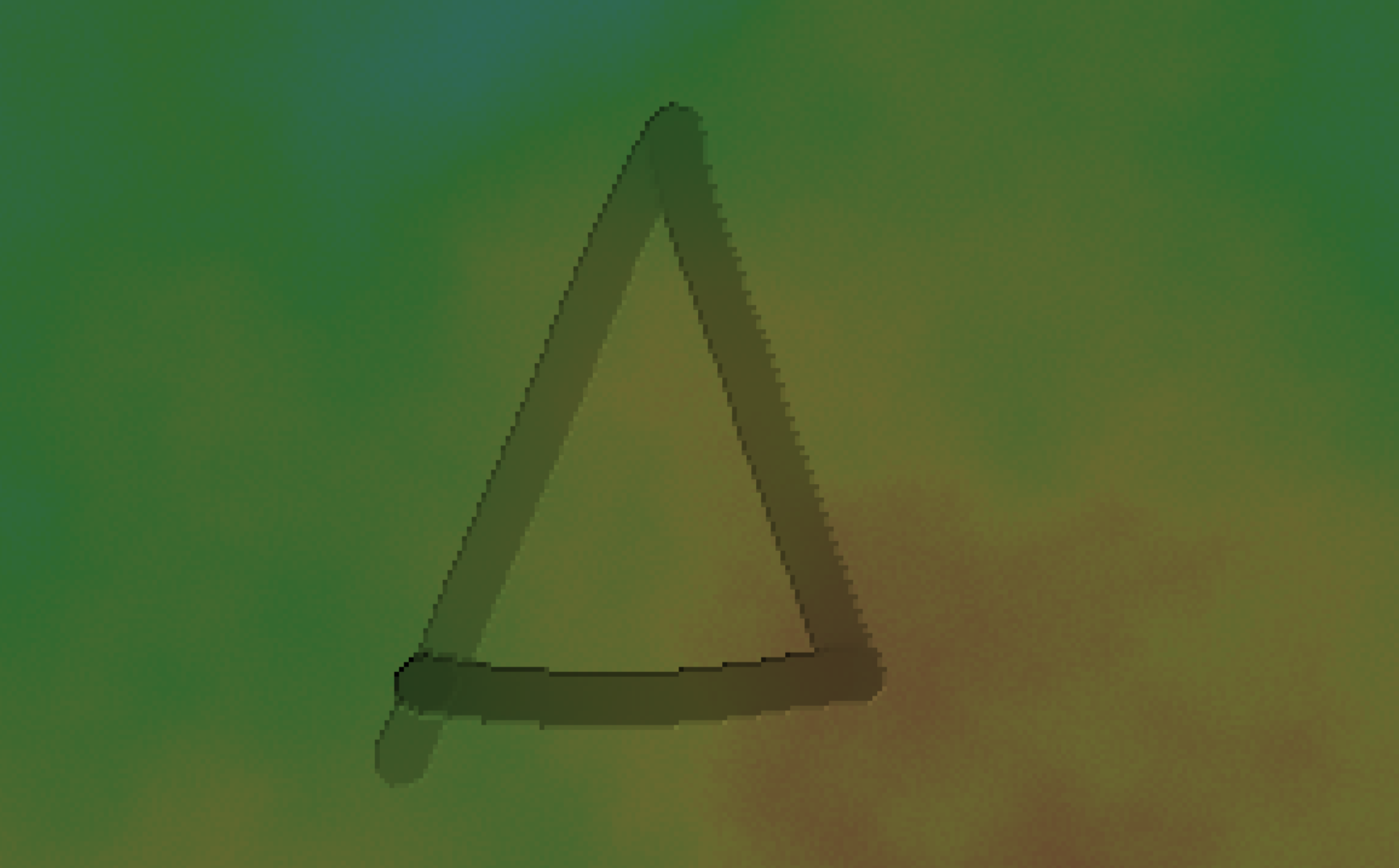
Replication of early visuals from Fire Kasina retreat, of using attention/intention to make shapes on the visual screen.
Open the simulation on its own. Drag on the screen to draw.
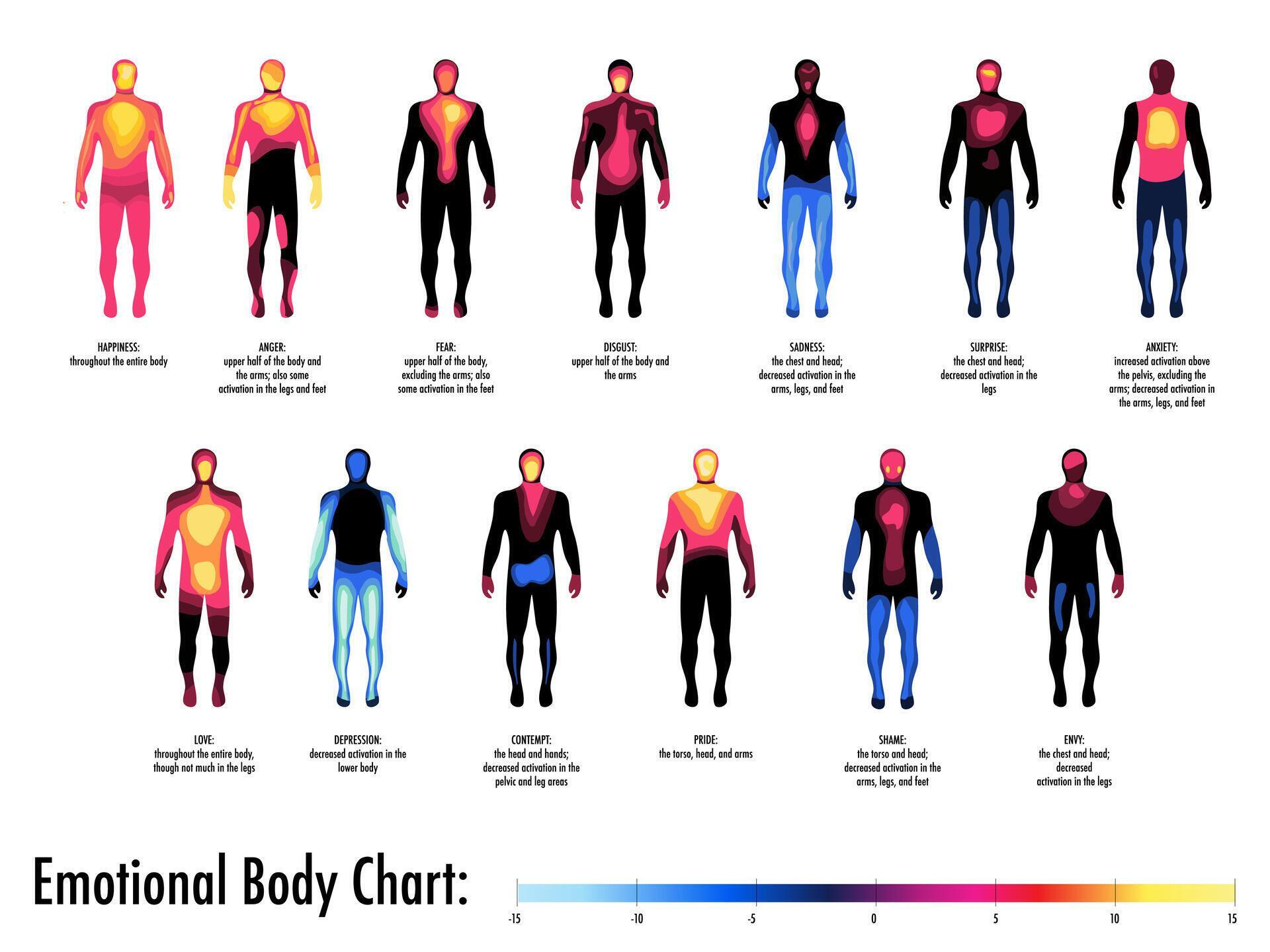
Lastly, another tell of the inherent connection between vision and somatic feeling is that anything you look at makes you emotionally feel something: be it initial judgements of subtle liking, or disliking, or even indifference (which does have an emotional tone to it, be it subtle). Everything we see has an unavoidable aesthetic (a vibe) to it. For those yet to notice, emotions/vibes/moods are encoded in somatic sensations; and remember those sensations don’t just have to be represented within the body-schema, but can be in the larger atmosphere of experience.
For instance, when you walk into a room, it has a vibe to it. The specifics of the feelings associated with any room will be more or less unique to each person, but that vibe is feeling based. And architectural and home decorating feng shui principles are about tuning into this feature of our experience and working with it to create more energetically harmonious spaces. #somaticvisualcoupling
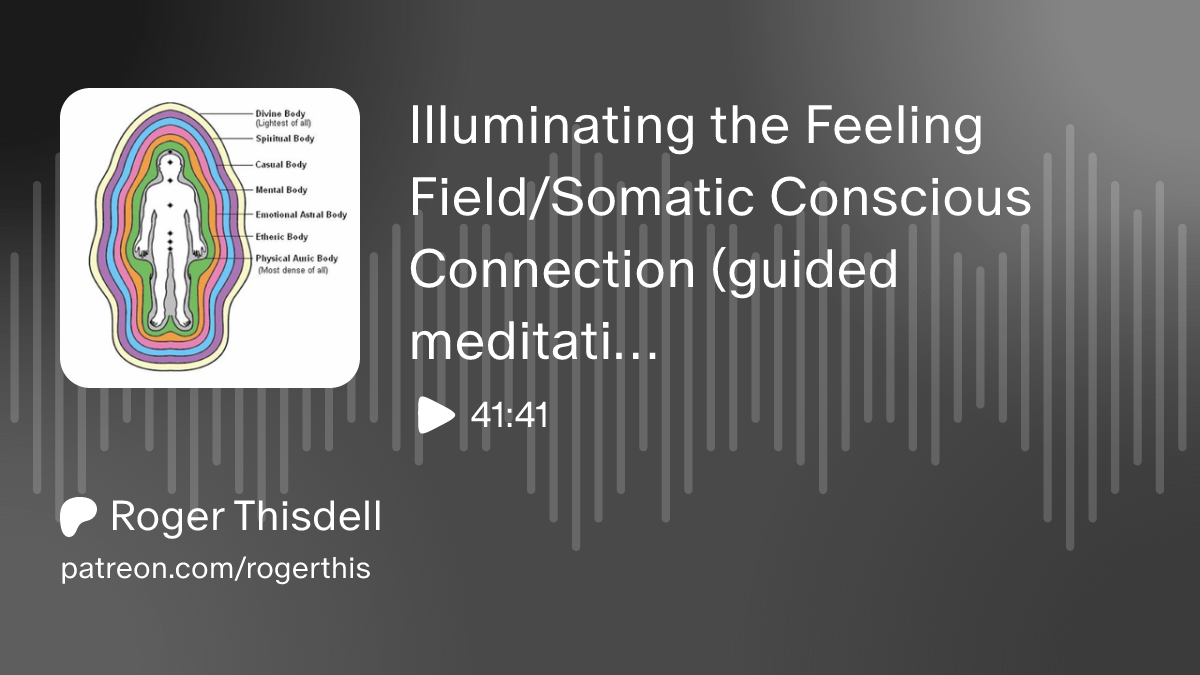
Listen to guided meditations by me exploring this theme
Why do so many spiritual circles talk about the ‘subtle body’, the ‘astral body’, the ‘light body’, the ‘bodymind’, etc.,etc.? Why is it always a ‘body’? Of course, if you want to know anyone’s reasoning for their word choices, best ask them; but to me these seem increasingly rather apt descriptions.
As we explore our consciousness more and more, we can find how extensively and exceedingly somatic sensations are felt throughout experience. And of course, there isn’t just somatic-visual coupling, but also somatic-auditory coupling. While somatic-olfactory (smelling) and somatic-gustatory (tasting) coupling is so evident, even to non-phenomenologists, that pointing out the connection between these senses is nothing shocking.
In fact, in French the verb sentir is used both to mean ‘to feel’ and ‘to smell’ (or more generally ‘to sense/perceive’), which raises questions about how objective or subjective our categorical distinctions between the senses are. Consider, different languages draw different distinguishing boundaries between colours that actually seem to influence peoples’ phenomenology. Could something analogous be true of the senses? Might the categories we call ‘sight’, ‘hearing’, ‘touch’, ‘smell’, and ‘taste’ be, at least in part (not unbounded by biological limits), linguistic or conceptual divisions imposed upon a more continuous field of sensory experience? Many come down on it all being one sense field of consciousness anyway; but even then, consciousness also seems to elude a final quantification - including oneness. #nonduality
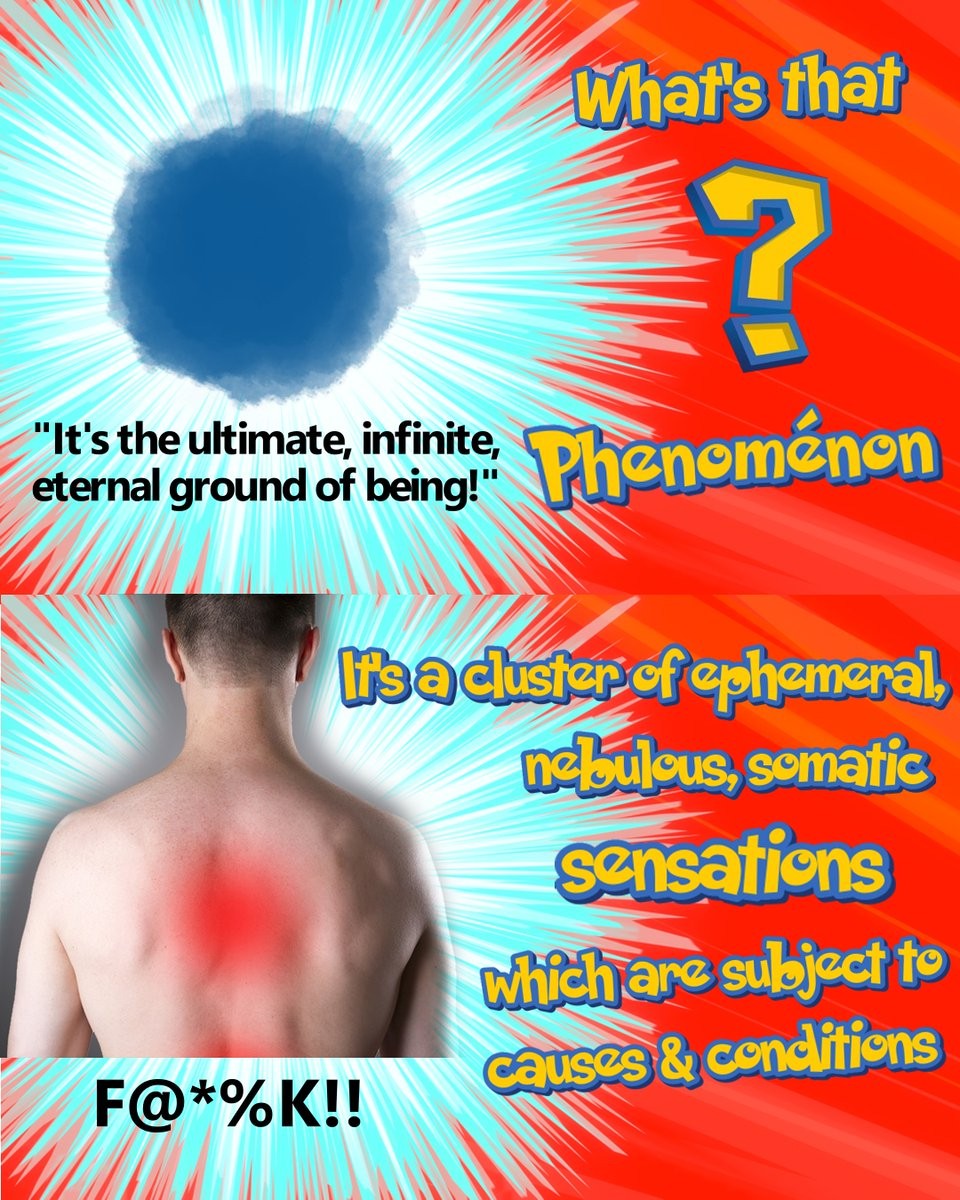
Summing-up, I’ve argued that somatic sensations are there to be found much further out than our typical body-schema lets on. They are in the sights, sounds, smells and tastes of our experience. Somatic sensations are the things of emotions. They are even in our thoughts and memories, sense of self and sense of awareness itself. Why do most (western) people report hearing their thoughts in their head? Because when thoughts arise, so do subtle patterns of somatic sensations in the head. What is the thing you are referring to as pure, formless awareness? I promise you, it’s some hard to locate somatic sensations uncoupled from the other senses.
Again, once you start really making this connection between somatic-visual coupling, and also somatic-auditory coupling etc., then it can begin to dawn on you just how entrenched somatic sensations are to conscious experience; that being conscious (at least as a human) is to feel.
So go explore your experience yourself, and find what you [can’t] feel.
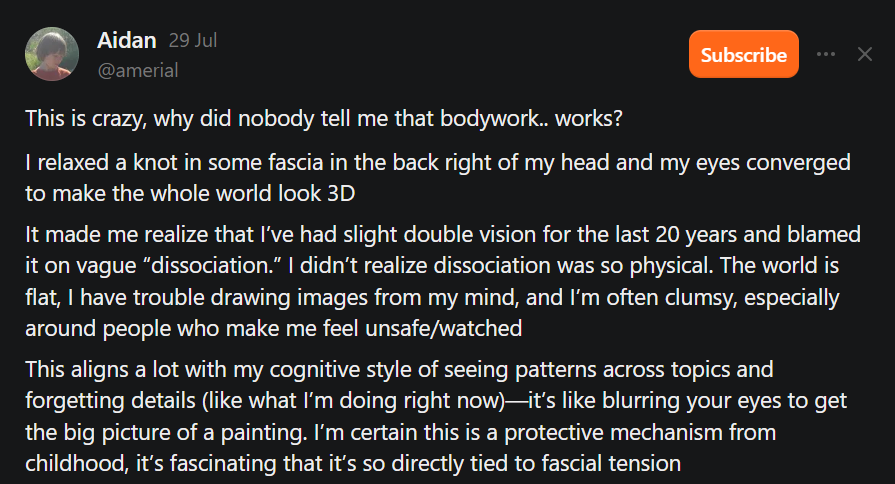
I am of the position that a sense modality (like somatic feeling) is a requisite feature of consciousness - a point I will back up in a separate article. ‘No sense modality = no consciousness.’↩︎
Citation
For attribution, please cite this work as:
APA
Thisdell (2026, September 11). Somatic-Visual Coupling: A Key to Understanding the Fundamentals of Human Consciousness. https://heart.qri.org/retreats/2026-tepoz/roger-thisdell/somatic-visual-coupling.html
BibTeX
@misc{thisdell2026somatic,
  author = {Thisdell, Roger},
  title = {Somatic-Visual Coupling: A Key to Understanding the Fundamentals of Human Consciousness},
  url = {https://heart.qri.org/retreats/2026-tepoz/roger-thisdell/somatic-visual-coupling.html},
  year = {2026}
}